Create Multimedia Lessons with Tegrity
This post is actually kind of funny when you think about what I’m doing. I used a screencapture program (Camtasia 8) to record of video of how to use another screencapture program (Tegrity) to create multi-media lessons. Brilliant! Anyway, I just recently upgraded my Camtasia to version 8, so I was anxious to try it out. This is a paid program that I chose to purchase years ago to help with creating lessons for my online courses. Not everyone teaching online can afford to buy their own software, so I’m glad that McGraw-Hill purchased Tegrity and now makes it available in Connect Composition 2.0. We adopted Connect with our English textbooks a few years ago, but McGraw-Hill just this summer updated the site to include this awesome lecture tool.
So the video that follows, created in Camtasia 8, shows how to get started with creating a lesson using a PowerPoint in Tegrity. Are you still following me here? No? Just watch the video then.
My first impressions of Camtasia 8 are wow! They totally revamped the program to make it even easier to use. It’s definitely worth the price to buy it. Even though we now have Tegrity, I still have uses for Camtasia.
Customizing My Canvas Course Part 1
I’ve been teaching in Canvas for a year now, but this fall Maricopa is officially switching over to Canvas on 9 of the 10 colleges. Remember RIO marches to the beat of their own drum. Anyway, it has been interesting to see how faculty in the district have reacted to this new change in LMS. Most seem to be happy, but others I feel are a bit intimidated by having to learn something new. It’s really not that difficult, but it will require some time to roll up you sleeves and dig in. It will be worth it.
I’m going to start posting some random videos of things I’ve done with my Canvas courses. Hopefully you’ll find something useful that you can use in your own. This first is a quick video to show how I’ve added buttons to my Canvas class for easier navigation on the home page. Also, I wanted to add a little branding and color to the class.
Gmail to Gmail Migration in Maricopa
Today was go live day for Google Guides at GCC. We are switching our email from an archaic MEMO system to shiny new Gmail. All I can say is finally. I’ve been using Gmail for at least 5 years both with a Gmail address and my own domains (freshmancomp.com), so I’m very familiar with the perks. So I’ve been waiting for this moment.
My excitement was dampened a bit when the first thing I tried to do didn’t work. What? All I wanted to do was get all of my emails, folders and filters from my existing Gmail account moved over to my new Gmail account. Can’t be that difficult, right? Well, actually it’s not, but I just couldn’t get it to work.
I found instructions for moving from Gmail to Gmail here: http://www.twistermc.
- Download Thunderbird and set up both the Gmail account and the work Gmail account in it.
- Both accounts would then show in Tbird and then you can just drag folders from one to the other – Easy Peasy.
- The work Gmail account kept giving me an error when I tried to set it up. It said that either my username or password was incorrect. I tried both the alisa.cooper and MEID at the beginning of the email address AND I reset my password in PAT to the same thing and it said it was synchronized in MEMO.
- I also made sure both accounts had the IMAP option turned on in Gmail.
I was stumped, so I kept playing around with it, asked everyone I knew on Twitter, Facebook and CyberSalon if they had a solution. I even called the Helpdesk. Nothing.
In the mean time, I paid yippiemove.com to do the migration for me, but I still wanted to find the answer to the problem. Not everyone is going to be willing to pay $15 to have it done for them, even if it worked great. So after a few more inquires, one of my CyberSalon pals pointed me to the MCC wiki and I found this article: Google Apps – Setting Up Thunderbird on Mac.
The information provided here was much different than the basic directions found elsewhere. The main difference was the need to input both the First.LastName and the MEID parts of the email address in the setup process. Also I had to really change my password first. Doh! Previously I had just updated it by inputting the same password in the PAT tool. Not sure if that worked, but the settings below did after I changed it.

Make sure everything matches what I have entered above and it should work.
If you want to move your filters too, you will need to do this separately, as IMAP doesn’t import/export filters. Just export/import them right in Gmail. That worked flawlessly as well. Don’t forget to turn on “Import Filters” in Labs first. Here’s how to do it.
FEP: Self-Examination of Three Required Areas & Two Elected Areas
For my FEP I chose to use a portfolio as means of assessment for each of the“REQUIRED,” “ELECTIVE,” and “RELATED” areas that are evaluated. My professional blog: Freshmancomp.com serves as my portfolio and links to all the relevant parts are listed below in the FEP description. Enjoy.
To complete an FEP each faculty member must engage in a self-examination of “THREE REQUIRED AREAS”:
- TEACHING (OR OTHER PRIMARY DUTIES). For example, instructional or service delivery, content expertise, classroom or program management, instruction/program design. I will focus on content expertise. One of the projects I’ve been working on since transferring over to GCC is building ENG101 and ENG102 course shells and teaching guides for adjunct instructors.
- COURSE OR PROGRAM DEVELOPMENT/REVISION. For example, a review of syllabi, tests, and course or program content, including competencies and objectives. I decided to work on improving instruction in my online courses. The plan involves creating more podcasts (video and audio) and screencasts to provide additional instruction for students in the online course.
- GOVERNANCE AND/OR COMMITTEE PARTICIPATION AT THE COLLEGE AND/OR DISTRICT LEVELS. I serve on the eCourse Committee and the CTLE Advisory Committee on campus. I serve on a district committee, Academic Technology Alliance (ATA).
In addition to an assessment of these “3 REQUIRED AREAS” (RFP Section 3.5.3.1.) , “AT LEAST TWO ELECTED AREAS” (RFP Section 3.5.3.2.), and other “RELATED AREAS” (REP Section 3.5.3.3.) may also be selected by the faculty member to review, in order to bring into better focus their full professional involvements at the college or within the District. Examples include program coordination, research projects, department/division chair responsibilities, student activities-advising/mentoring, professional involvement in the community, professional growth, involvement/projects, professional interaction with colleagues, etc.
As a means of designing an FEP that is flexible enough to respect the broad diversity of the faculty role, a faculty member developing and implementing the plan should select ways of examining his/her performance that will most effectively describe his/her: current performance, future goals and actions needed to achieve them, accomplishments in the professional areas to be examined, etc. These may include different means of assessment for each of the“REQUIRED,” “ELECTIVE,” and “RELATED” areas that are evaluated. Examples of different means include checklists, observations, student evaluation instruments (which can be customized), student skill inventories, video assessments, portfolios, written summaries, conferences, etc.
FEP: Self Assessment of Acquisition of New Skills
In addition to an assessment of these “3 REQUIRED AREAS” (RFP Section 3.5.3.1.) , “AT LEAST TWO ELECTED AREAS” (RFP Section 3.5.3.2.), and other “RELATED AREAS” (REP Section 3.5.3.3.) may also be selected by the faculty member to review, in order to bring into better focus their full professional involvements at the college or within the District.
 This post will focus on an elected area: Acquisition of New Skills. Something about this requirement makes me want to laugh. I wonder if anyone has trouble with assessing their own acquisition of new skills. Would anyone ever say, “nah, I didn’t learn anything this year”? Just seems funny to me. I’m actually having trouble thinking about how to assess all the things I’ve learned in the past year. I guess the best way to explain it is to just say: Read my blog. Yep, for years I’ve been blogging about all the cool things I’ve learned about teaching and learning with technology.
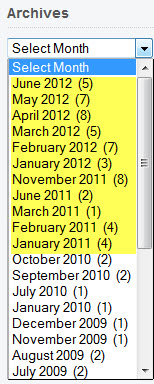
And although I don’t blog nearly as much as I want to, I’ve managed to post 54 times over the past two year.Mostly I blog about new technology tools I’ve learned about and how I might or have integrated them into my teaching. One of my most popular series on my blog is when I blogged about saying goodbye to Blackboard. This was before we adopted Canvas. I’d had enough and figured out a way to teach all of my online classes in a WordPress blog. I blogged about the challenges and of course to benefits of taking that leap. Part 2 of that series was my 2nd most viewed post: Saying Goodbye to Blackboard Part II – Student Blogs & Privacy – 6,488 views.
I read extensively about teaching and learning with technology and follow numerous blogs online. My RSS feedreader gets used often on my phone, tablet, laptop and desktop computers. I love the Google Reader gives you stats. Check this out.
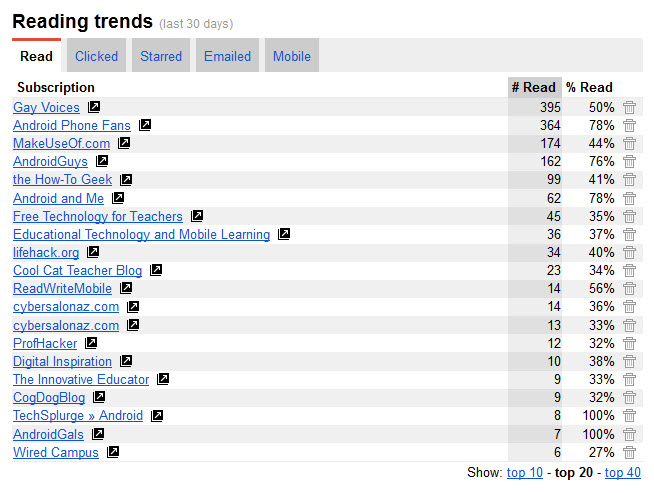
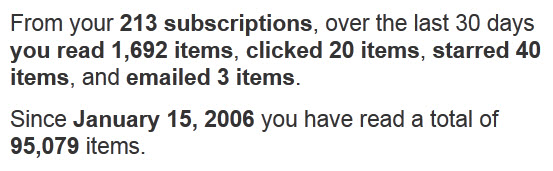 Now I’d say that is some reading. So what have I learned? I read mostly about Android, mobile learning, educational technology, and geek stuff. Below are my reading trends from the past 30 days. All but the first is related to my profession and interests in technology.
Take a look around the blog and I’m sure you’ll learn something. I post my weekly Diigo finds here as well. Essentially what that means is when I read some very interesting things or find great technology tools online, I bookmark them in Diigo and then post the best stuff here. It is continuous learning at it’s best with the system I’ve designed for myself. And the best part is it all works on my phone too, so I can take my learning with me where ever I go. Nice.
FEP: Self Assessment of Professional Development – Conferences & CyberSalon
In addition to an assessment of these “3 REQUIRED AREAS” (RFP Section 3.5.3.1.) , “AT LEAST TWO ELECTED AREAS” (RFP Section 3.5.3.2.), and other “RELATED AREAS” (REP Section 3.5.3.3.) may also be selected by the faculty member to review, in order to bring into better focus their full professional involvements at the college or within the District.
This post will focus on an elected area: professional development, which Maricopa provides plenty of opportunities for, both inside and out the district. I make it a habit to attend at least two conferences each year. This year I attended InstructureCon in Park City, Utah. This conference was a great venue for learning more about the new LMS Maricopa has adopted. Many other Maricopians were in attendance and it was nice to talk to them about how their implementations were going and to see their great presentations on how they are using Canvas. It was also nice to be able to ask questions of the Instructure team for trouble spots I’ve experienced with Canvas so far. I attended many sessions, including Hack Night. But the most eye-opening experience from the conference was learning about LTI’s and how we can add tools to Canvas using them. LTI is Learning Tools Interoperability (LTI) and they allow remote tools and content to be integrated into a Learning Management System (LMS). For instance, I learned that I could add WordPress blogs into my Canvas class using a LTI. Canvas has a list of current LTI integrations that you can explore for more added functionality.
 The biggest professional development for me has always been my interactions with like minded individuals within the district and out. A few years back Shelley Rodrigo started a Maricopa professional development group called CyberSalon. We call it a grass roots professional development and several of us have presented about it at national conferences. Laura Ballard and I did a poster session at the Sloan C conference a few years back. Cheryl Colan from RIO designed the poster and Shelley conducted the survey.
Here is a quote that summarizes what CyberSalon is for one member.
“It’s a casual environment that is more conducive to sharing ideas with everyone instead of the information being delivered by one presenter. It’s a little like speed dating….at face-to-face meetings I can hop around the room chatting with everyone getting specific answers to my questions. I also like the group as professional development because knowledge and ideas are being shared by people in the trenches of teaching and not a presenter that gets paid for speaking to educators.”
I learned so much from the 80+ members of CyberSalon over the years. The way it works is we meet up once a month on a more social level and discuss all things related to teaching and learning with technology. Some of the meetups are theme based. We had one on Canvas and another on VoiceThread this year. We’ve also covered WordPress and gaming, but mostly the meetups are just free flowing – discuss whatever is on your mind. When we’re not meeting, some of us are blogging about technology on the CyberSalonAZ blog site, as well as our own blogs. And the meat of the group is the Google group where we share resources and ask questions of each other.
Since Shelley, the group founder, has moved on from teaching in Maricopa, several of us have stepped up to “manage” the group and keep things rolling.
FEP: Self Assessment of Asst. Department Chair Responsibilities
In addition to an assessment of the “3 REQUIRED AREAS” (RFP Section 3.5.3.1.) , “AT LEAST TWO ELECTED AREAS” (RFP Section 3.5.3.2.), and other “RELATED AREAS” (REP Section 3.5.3.3.) may also be selected by the faculty member to review, in order to bring into better focus their full professional involvements at the college or within the District. Examples include program coordination, research projects, department/division chair responsibilities, student activities-advising/mentoring, professional involvement in the community, professional growth, involvement/projects, professional interaction with colleagues, etc.
In this post I will focus on department/division chair responsibilities. First, I am not a department chair, nor do I ever want to be one. I’m thankful to have a great chair to work under, and somehow I ended up being an assistant chair along the way. In my roll as the eCourses coordinator for the English department, I started out being in charge of further developing the online program in our department. I watch enrollments and makes suggestions for adding additional online courses if all of sections fill up. In order to do this, we have to qualified adjuncts available and ready. I help faculty get trained and to develop both online and hybrid courses. I’m also responsible for mentoring and evaluating new online faculty. This past semester we decided to open it up a bit and get more adjuncts trained in teaching online. I’ve been working with 8 adjuncts and several full-time faculty on developing new online and hybrid classes. Our growth has been tremendous.
English Department eCourses Growth Over the Last 3 years. Fall 2009 – Total of 12 online courses – Don’t have the break down.
This Spring 2012 – 38 total online courses in the department
Writing Courses
- 2 CRW170/CRW270 (Creative Writing)
- 4 Developmental Ed Modules (1 credit each)
- 8 ENG101 (Freshman Comp I)
- 1 – 8 week
- 1 – 12 week late start
- 12 ENG102 (Freshman Comp II
- 1 – 8 week
- 1 – 12 week late start
- 1 ENG111 (Technical Writing)
- 2 ESL
ENH: English Humanities/Literature Courses
- 2 ENH110 ( Intro to Lit)
- 1 ENH242 (American Lit)
- 1 ENH285 (Contemporary Women Writers)
- 3 ENH291 (Children’s Lit)
- 1 ENH295 (Banned Books)
- 1 ENH235 (Gothic Lit)
Considering that we offer around 440 sections each semester this is roughly 8%. We’re at 10% with our hybrid courses added in.
We’ve added 5 more online ENG101 for this fall and 5 more ENG102’s for Spring 2013, although we’re starting to see a drop off in enrollment, so our growth might be slowed moving forward. However, if we need to continue to grow, we now have adjuncts trained and ready to teach new online courses.
As eCourses Coordinator I’m now responsible for book orders for all online courses, so I’ve done that for that last two semesters. I’ve been meeting on my own time this summer to work with faculty who are finishing up course development on classes they will teach this fall. And I’ve scheduled for technology training for our text book online supplement – Connect Composition 2.0. We had a session last week with 15 people in attendance. We have another training scheduled for July.
Diigo Links for the Week (weekly)
-
HelloSlide – Bring your slides to life
Bland presentations come to life when you add audio and video elements. Audio also becomes much more important when you are sending presentations online. Fortunately, Hello Slide is a text-to-speech mashup that lets you add audio overlays to presentations and then host them for you.
FEP: Self Examination of Committee Participation – Slam Dunk!
To complete an FEP each faculty member must engage in a self-examination of “THREE REQUIRED AREAS”:
- GOVERNANCE AND/OR COMMITTEE PARTICIPATION AT THE COLLEGE AND/OR DISTRICT LEVELS
I currently serve as an assistant chair/eCourses coordinator for the English Department and work with faculty to create and/or improve their online/hybrid courses. I also evaluate all online/hybrid instructors and courses in the English department. I serve on the eCourse Committee and the CTLE Advisory Committee on campus. As part of the duties of the CTLE Advisory committee, I’m currently serving on a hiring committee to hire a Coordinator of Technology Training for the CTLE. Yes, we are still working on this – round 2. This group was also responsible for writing the job description for the new Faculty Lead for the CTLE and hiring the new Instructional Designer.
For eCourses, I volunteered to help create an eCourses Student Orientation (what was I thinking?) and am slowing working on that. We have a few modules already completed and hope to finish before fall. I helped Leah with the HLC paperwork for our online courses in the fall. I also helped by doing 3 online course reviews for the eGCC Gold Reviews.
I serve on a district committee, Academic Technology Alliance (ATA), that meets monthly in addition to smaller subcommittee activities. The main objective of the ATA is to identify and strategically implement effective learning technologies across all ten colleges in the district. I’m on a subcommittee looking at Reusable Learning Object creation tools, like Softchalk (interactive lesson authoring). The ATA submitted three proposals to ITTGC that were accepted and are in process of going out for RFP.
- Plagiarism Detection Tools (RFP process) recently presented to IITGC by ATA for RFP Funding has been approved.
- Interactive Lessons Authoring (RFP process) recently presented to IITGC by ATA for RFP Funding has been approved.
- HD Standards and Services (RFP process) recently presented to IITGC by ITLC for RFP Funding has been approved.
We were told that our committee was the most active and accomplished the most in the first year of this new IT governance model. It feels good to know that we are doing things to help make teaching and learning better for all faculty in the district.
I have the motto of “no meetings where nothing gets done.” I hate to sit around and listen to people to talk about doing stuff and doing nothing. I chose my committee assignments based on the knowledge that these committees do and don’t just talk. I was present for most of the meetings this semester and actually looked forward to going.